

I feel like a broken record writing about the NCAA, but it seems like every other week they find a new regulation that impacts athletes and fundamentally changes college sports as we know it.
What is it this time?
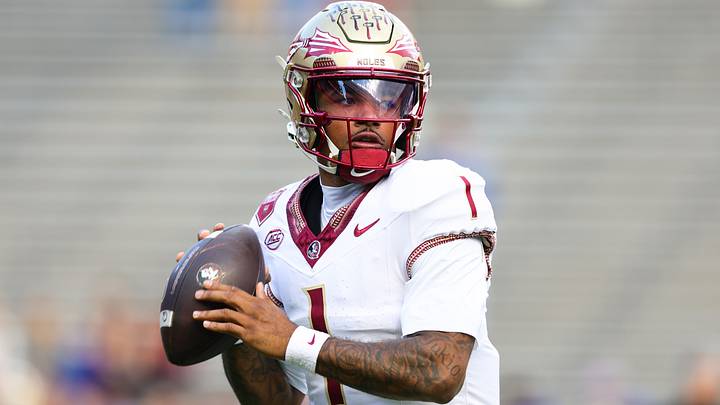
Former Florida State quarterback Tommy Castellanos thought his college career was over after the 2025-26 season. Then, a series of court rulings surrounding the NCAA’s new eligibility framework reopened the door for Class of 2022 athletes to pursue a fifth season, giving Castellanos one more year.
But just as quickly as that door opened, the NCAA found a way to complicate things. Castellanos was initially unable to enter the transfer portal because the traditional window had already closed. So, he took the NCAA to court and won.
A Kentucky judge granted Castellanos a temporary injunction giving him a fifth season of eligibility and access to the transfer portal. He entered the portal and was recently picked up by Texas Tech to compete for the 2026 season.
A New Era of Eligibility
Under the new “five-for-five” system, Division I athletes will have five continuous years to complete five seasons of competition, creating a more age-based approach to determine how long athletes can compete. The NCAA says the new model is designed to make eligibility more predictable and eliminate the excess years given by a waiver-driven system.
But the Class of 2022 was not grandfathered into the new rule.
Instead, their additional year came after a federal judge in Colorado issued an injunction allowing those athletes to compete for a fifth season. The NCAA appealed, and on Aug. 21, the 10th U.S. Circuit Court of Appeals temporarily halted that ruling.
As quickly as that, athletes who had already returned to campus and begun preparing for another season were left wondering whether they were even allowed to play.
Some of these athletes were even pulled away mid-practice as compliance departments tried to determine whether they were allowed to participate.
The NCAA Can’t Have It Both Ways
Now, let’s get it all straight.
The NCAA created a new eligibility system. The system excluded the Class of 2022. Athletes challenged that decision. A federal judge gave them another year. The NCAA appealed. Appeals court temporarily took that year away.
Meanwhile, individual athletes have gone to court and received their own exemptions. That means one athlete can be eligible while another athlete in essentially the same position is not.
That is the problem.
The NCAA obviously has legitimate concerns about roster management, as giving thousands of athletes another season creates complications for just about everyone involved. However, those concerns cannot come at the expense of the athletes directly affected by the NCAA’s decisions.
Castellanos was lucky enough to receive an individual injunction. Others are not so lucky.
The NCAA continues to make decisions based on what works best for its own system, while athletes are left trying to navigate the consequences.
More Questions
As a former student-athlete, it is easy to understand why eligibility rules need structure. COVID years, redshirts, medical redshirts, pink shirts, and mental hardship waivers all created exceptions that have allowed athletes to play upwards of 7 years. At some point, college athletics must have a limit.
The five-for-five model could be that limit.
But a rule cannot create structure if nobody knows who it applies to.
Right now, athletes are practicing who may not be allowed to play and athletes like Castellanos have had to go to court simply to use an eligibility year they were granted.
The NCAA wanted to fix the eligibility problem, but instead it created another one.
And once again, the athletes are the ones left trying to figure it out.
 Add us as a preferred source on Google